

- Published on
Promotional Pricing Strategies That Drive Massive Customer Growth
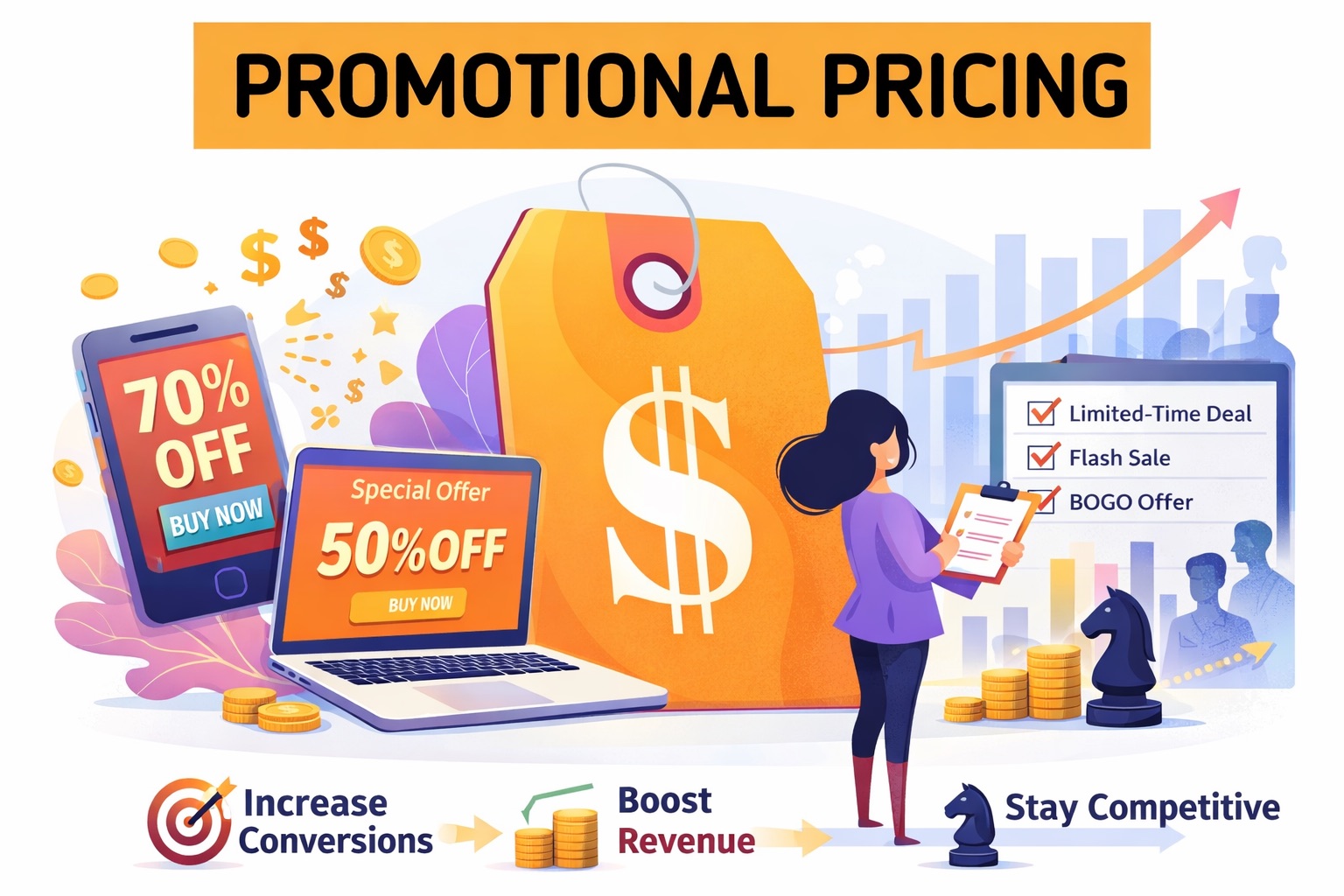
Promotional pricing strategies that drive massive customer growth
In competitive e-commerce markets, smart promotional pricing can rapidly expand your customer base. Well‑crafted promotions (temporary discounts, flash sales, coupons or bundles) create urgency and tap into price sensitivity. When a sale is announced, hesitant shoppers fear missing out and often buy on impulse. In fact, data show that strategic discounts can dramatically boost conversions: in one case study a 17.5% Black Friday discount "almost doubled the number of conversions". These tactics help acquire new buyers, clear inventory, and increase market reach especially when they are aligned with a broader price positioning strategy that supports overall value perception and brand goals.
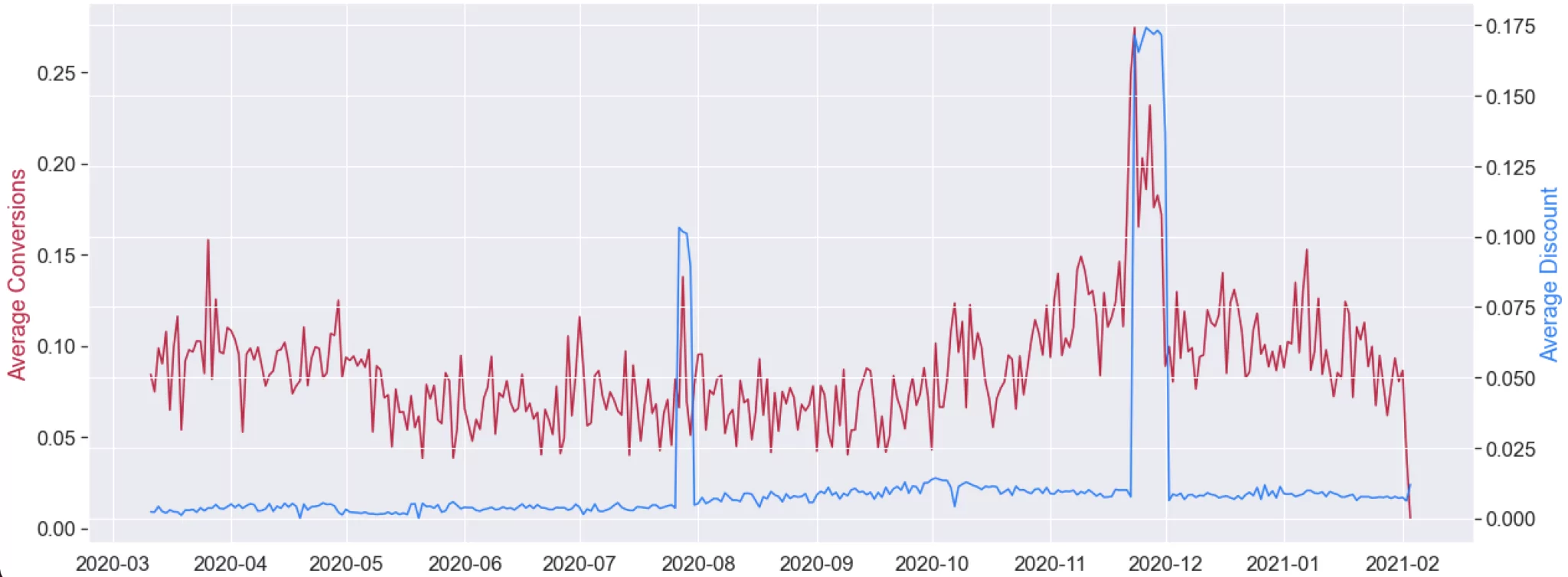
Source: Smarter Ecommerce
Promotions are most effective when sparingly applied. They should tie to specific events (product launches, holidays or loyalty rewards) rather than run constantly, which can erode brand value. For example, rather than endlessly discounting all products, top online retailers offer time-limited deals that push users to act quickly. The key is balancing short‑term growth against long‑term loyalty: use promotions to engage and grow your customer base, but measure impact carefully to avoid training buyers to "always wait for deals".
Key benefits and pitfalls of promotional pricing
Promotional pricing can supercharge customer growth in several ways, but it carries risks if misused:
Create urgency (FOMO). Limited-time offers make shoppers worry prices will rise soon, prompting fast decisions. Seasonal sales, flash deals or countdown promotions leverage the "fear of missing out" to boost conversion rates.
Attract new shoppers. Lowering prices or bundling products exposes your brand to bargain hunters and competitors' customers. Discounts catch the attention of new customers who might buy from your competitors and can even spur referrals. In other words, targeted promos can grow your audience beyond existing buyers.
Clear inventory & launch products. Sales and bundles help move old stock and free up capital. Likewise, introductory pricing or discount offers for new products draw early adopters and generate buzz. This makes room for new SKUs while getting more buyers to try your brand.
Boost loyalty (to an extent). Rewarding repeat customers with members‑only deals or points builds loyalty. Occasional exclusive coupons or multi‑buy offers make current customers feel valued and more likely to return.
However, promotional pricing also has pitfalls: constant or deep discounts can harm your brand and margins if pricing rules are not carefully controlled. Customers may start waiting for sales instead of buying at regular price, reducing full-price revenue. Overuse of promos can lower the perceived quality of your products and squeeze profits. Some studies even show that overly aggressive discounting undermines future attempts at upselling or general price increases. High churn is another risk: shoppers acquired purely by discount often prove switch-prone and less loyal.
Best Practice: Use promotions strategically and sparingly. Tie deals to specific goals (acquire new segment, move seasonal inventory, reward loyalty) and monitor results. Don't forget to maintain transparent and consistent pricing overall and limit constant discounting to avoid training customers to wait for sales. Measured, purpose-driven promotions support growth, whereas relentless coupons can backfire in the long term.
Types of promotional pricing strategies
Online merchants have many promotional levers. Below are common tactics that drive sales growth in e-commerce, along with examples and when to use them:
Percentage or flat discounts. The simplest price promotion strategy is reducing prices by a fixed percentage or a fixed dollar amount. The choice should depend on the product's price level: flat-value discounts tend to work better for lower-priced items because the savings feel more concrete, while percentage discounts are usually more effective for higher-priced products, where they scale better psychologically. When to use: during holiday events or store anniversaries to spike traffic.
Bundle deals and BOGOs. Bundle complementary products at a reduced combined price. For instance, "buy these three products together and save 15%", or a classic BOGO ("buy one, get one free"). Bundles increase average order value and help clear slow-moving stock. They also provide customers an easy value-add (e.g. a phone sold with headphones at 20% off both). When to use: pair new or flagship items with accessories to boost adoption, or move inventory efficiently.
Flash sales (limited-time offers). Very short (often hours or a few days) sales with deep discounts and no advance notice. Flash sales trigger immediate action and excitement. They work best for clearance items or new releases, where a sudden deal drives urgent traffic. When to use: unannounced weekend sales, mid-season clearance, or special events.
Coupons and voucher codes. Distribute unique discount codes via email, social media or influencers. This drives targeted traffic and can track promotion effectiveness. Coupons create a sense of exclusivity or scarcity (e.g. "200 people only!"). When to use: influencer partnerships, retargeting ads, or exit-intent popups.
Seasonal & holiday promotions. Tie discounts to holidays (Black Friday, end-of-year, Back-to-School) or seasonal shifts. These recurring promos set shopper expectations (people anticipate Black Friday deals). They help clear seasonal inventory and align your brand with major shopping moments.
Loyalty & member-exclusive deals. Reward repeat buyers with special prices or points. For example, VIP members get an extra 10% off or free gifts. Loyalty promotions encourage repeat purchases by making existing customers feel appreciated.
Free shipping thresholds. Technically a pricing promotion: offer free shipping on orders above a certain value. For example, "Free shipping on orders over $50". This incentivizes higher cart sizes and adds value without directly cutting product prices. When to use: to lift average order value (AOV) and smooth checkout friction.
Volume/tiered discounts. Reward bulk purchases with better pricing (e.g. "10–19 units: 5% off, 20+ units: 10% off"). This classic B2B tactic also applies to B2C wholesale options. Volume discounts move inventory fast and appeal to budget-conscious bulk buyers. When to use: selling bundles for events (wedding favors, party supplies) or to small retailers ordering online.
These tactics, of course, often overlap. For example, a flash sale might use a percentage discount plus free shipping. A loyalty program might include exclusive coupons and early access to seasonal sales. The goal is to mix and match strategies that fit your product mix and customer base.
Advanced and underused promotional tactics
To stand out and drive massive growth, consider some less-common or innovative approaches:
Personalized dynamic discounts. Leverage customer data to tailor promos. For instance, show individualized "X% off" offers to users who have viewed or abandoned a product, or offer loyalty discounts via in-app notifications. Studies in e-commerce suggest that competitive pricing for highly popular brands can boost conversion rates – and personalization amplifies this by targeting the right buyers. Modern pricing tools and A/B tests let you experiment (e.g. try a 10% vs 20% discount in real time) to learn what maximizes sales without unduly sacrificing profit.
Gamification & interactive deals. Make promotions fun: e.g. "spin-to-win" wheels, scratch-off discounts, or quiz-based coupons. Gamification engages shoppers (increasing time on site, which is beneficial because it exposes customers to more products, improves engagement signals, and increases the likelihood of conversion) and can encourage sharing on social media. According to research, adding game mechanics to discounts significantly boosts impulsive purchases (one study found gamification + discount increased impulse buying by ~47%). This tactic also collects email leads or social follows when customers participate.
Psychological pricing (charm pricing). When running promotions, set prices to "just-below" figures. Charm pricing (e.g. $19.99 instead of $20.00) exploits the left-digit effect: customers tend to perceive $19.99 as substantially cheaper than $20.00. In practice, ending sale prices in 9 or 7 can nudge price-sensitive buyers. Also, odd pricing has been found to "boost sales" by making deals feel more affordable. Combining charm pricing with a visible original price anchors value ("was $20, now $19.99").
Anchoring and decoy tactics. Show the higher original price next to your promo price to highlight savings. Or introduce a third "decoy" option that makes another choice seem more attractive. For example, listing a bundled option slightly higher than two single items priced differently can steer customers to one option over another. These subtler pricing cues can significantly influence customer decisions during a promotion.
Referral discounts. Offer discounts to customers who refer others (and give the new customer a discount too). Word-of-mouth plus a $ reward (e.g. "Give $10, Get $10") can expand your reach at relatively low cost. Referred customers often have 37% higher retention rates, boosting lifetime value. (While references for exact figures vary by source, referral programs are widely cited as very effective for e-commerce growth.)
Flash giveaways and bundled freebies. Occasionally, give a free small product or sample with any purchase. This adds perceived value and introduces customers to another product. The cost is offset by the promotion's ability to drive new orders and loyalty.
These advanced tactics go beyond plain discounts. By incorporating customer psychology (FOMO, game rewards, visual anchors) and technology (personalization engines, interactive content), you can make promotions more compelling without continually lowering base prices. Always test new ideas on a small scale first to measure their impact.
E-Commerce promotional pricing considerations
For e-commerce store owners, promotional pricing strategies must be tailored to online shopping behavior, cart mechanics, and price comparison dynamics, and the focus should be on increasing conversion rates, average order value, and repeat purchases, while protecting long-term price perception.
Custom and segment-based deals
Unlike negotiated pricing, e-commerce promotions rely on segmentation and automation. Store owners can deliver exclusive promo codes or targeted discounts to specific customer groups, such as first-time visitors, returning customers, email subscribers, or cart abandoners.
Running limited promotions for select segments (for example, loyalty members or post-purchase upsells) helps drive conversions without exposing discounts site-wide, preserving margin and brand value.
Integrating Dynamic and Data‑Driven Tactics.
E‑commerce environments enable more advanced pricing tactics than static discounts alone. Consider dynamic promotional pricing that adjusts offers based on real‑time data such as inventory levels, competitor pricing signals, and customer behavior patterns. Tools that leverage automation and analytics can help you optimize promotional timings, discount depths, and product selection so that deals are both compelling to customers and economically justified for your business. These data‑driven strategies ensure you aren’t guessing when to run deals and can adapt quickly to market changes while protecting margins.
Measuring success and best practices
The most effective promotional pricing strategies are data-driven and well-measured. Use analytics to track exactly how each promotion impacts sales, margins, and customer behavior:
Set clear goals. Before a promotion, define success metrics: number of new customers, total revenue, inventory sold, or repeat purchase rate. For example, a clearance sale may aim primarily at freeing up old stock, while a new-product discount targets trial usage.
Use A/B testing. Whenever possible, test promotions on segments (half your audience gets the discount, half pays regular price) to measure lift. Modern ecommerce platforms and marketing tools often support coupon A/B tests. This avoids guessing what works.
Marketing Mix Modeling (MMM) and Analytics. For bigger operations, MMM can quantify how different tactics affect revenue. It helps brands understand which promotion types generate the most incremental value. Even without complex models, track the incremental sales during a promotion (sales minus baseline forecast) to evaluate ROI.
Monitor long-term effects. Don't just watch the week of the sale — track customer churn, repeat purchase rates, and lifetime value of buyers acquired through promos. Some research warns that heavy discount seekers may be "disloyal", so balance acquisition metrics with retention metrics.
Consistency and transparency. Maintain a consistent pricing backbone. If products are regularly discounted, customers may lose trust in your "real" price. Keep base prices clear and only use promos as festive boosts or targeted rewards.
Coordinate with marketing. A promotion should be widely communicated (email, social media, PPC) to maximize its reach. Also integrate site messaging: highlight deals on the homepage, and use on-site banners during the promo period. Ensure cart pages show how much the customer saves, reinforcing the deal's value.
Leverage competitor data. Keep an eye on competitor promotions to avoid being undercut. For structured insights into where your prices stand relative to competitors (beyond simple monitoring) consider integrating a competitive price analysis process to identify pricing gaps, trends, and optimal promotion points. Price monitoring tools (like PriceOtus) can alert you when competitors run big sales. This intelligence helps you adjust the depth or timing of your own offers.
By measuring carefully and aligning promotions with broader strategy, you ensure each deal truly contributes to growth rather than just chipping away at profit. In practice, that means tracking conversion uplifts, segmenting customers (e.g. first-time vs repeat buyers), and adjusting future pricing plans based on hard data.
Conclusion
Promotional pricing is a powerful driver of customer growth when applied strategically. Targeted discounts, bundles, and time‑limited offers can attract new buyers and boost sales volume. However, to sustain massive growth you must couple promotions with data analysis and brand alignment. Use promotions to amplify demand, not replace value, by tying deals to clear marketing goals and tracking their impact. As experts advise, focus on limited, high-impact offers (anchored to product launches or bundles) rather than constant sales. With smart planning backed by analytics you can harness the positive force of promotional pricing to expand your customer base, strengthen loyalty, and improve market share in e-commerce.