

- Published on
Price Positioning Brilliance: How to Make Your Offer Feel Like a Steal
Price positioning: how B2B e-Commerce sellers can win without racing to the bottom
Price positioning is one of those topics everyone thinks they understand - until margins start shrinking or competitors suddenly undercut you. In B2B e-commerce, pricing is not just a number. It's a signal. It tells buyers who you are, how confident you are in your value, and whether you're worth a long-term relationship.
We've seen this repeatedly: sellers who treat price positioning as a strategic lever outperform those who only "match the market".
What price positioning really means (beyond definitions)
At its core, price positioning is about where your price sits in the competitive landscape and what that placement communicates. Not cheap vs expensive - intentional vs accidental.
In e-commerce, buyers don't just compare prices, they compare risk. A price that's too low raises questions. A price that's too high demands justification. Your job is to make that price feel inevitable given the value you offer.
This is why price positioning should never be decided in isolation. It's tightly connected to your product depth, brand credibility, promotional pricing and other elements of your marketing mix.
The three core price positioning strategies (and why most sellers misuse them)
Most pricing discussions circle around three well-known strategies. The problem isn't that they're basic - it's that they're often applied without context.
Premium pricing positions your product above most competitors. In e-commerce, this only works when your price is supported by visible differentiation: better data, stronger guarantees, deeper integrations, or lower switching costs. Premium pricing fails when sellers assume "higher price = higher perceived value" without proving it.
Competitive pricing is the most common strategy and the most misunderstood. Matching or slightly undercutting competitors can be effective, but only if you understand which competitors actually matter. Blindly reacting to every price drop often leads to margin erosion without gaining loyalty. This is where structured competitive price analysis becomes essential - and where a tool like PriceOtus earns its place in the stack, since it tracks the competitors who actually matter to your catalog in real time and flags the moves worth reacting to, instead of leaving you to guess from a handful of manual checks.
Economy pricing focuses on being the affordable option. This strategy attracts highly price-sensitive buyers but often comes with higher churn and tougher negotiations. Sellers using economy pricing successfully tend to compensate with operational efficiency, automation, or scale.
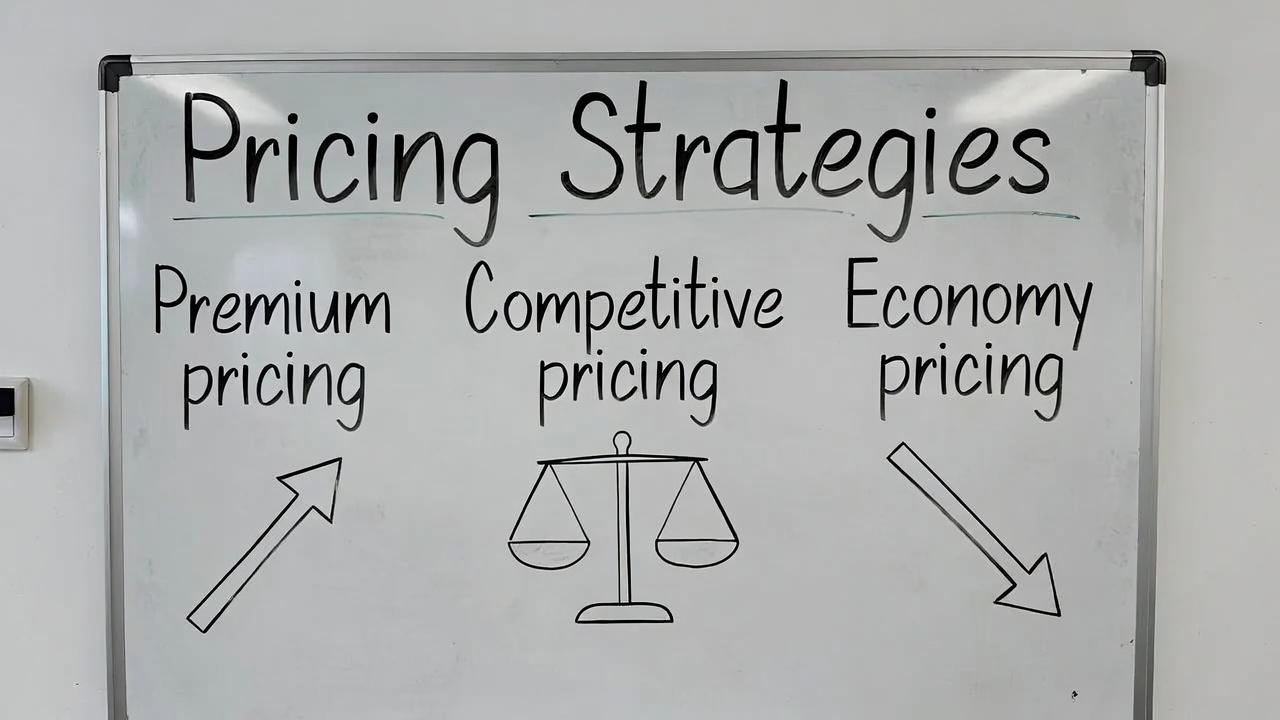
The key insight here: price positioning is about commitment. Switching between these strategies too often confuses the market and weakens trust.
The hidden variable: price consistency over time
One thing that's rarely discussed: buyers remember price behavior, not just price points.
Frequent, unexplained price changes can hurt how customers see your brand. If your prices jump up and down while competitors stay steady, buyers may feel unsure about trusting you - even if some prices are tempting.
This is why historical data matters. Tracking how competitors price over time - not just today - helps you understand whether stability itself can be a competitive advantage.
Competitive pricing isn't about being cheaper
Many sellers still believe competitive pricing means undercutting. In reality, strong price positioning often means choosing not to follow every move.
When we analyze pricing data across marketplaces, we often see that:
- The cheapest seller rarely wins long-term contracts
- Mid-priced sellers with clear value justification convert more consistently
- Premium sellers outperform when their pricing story stays coherent
On fast-moving channels, especially marketplaces, this becomes even more obvious. Tools that track prices over time, like those used for eBay, help maintain price control (MAP), reveal patterns: temporary discounts, algorithm-driven drops, or defensive pricing, that manual checks completely miss.
Psychology still matters in pricing decisions
Yes, shoppers make rational decisions, but they're still human.
Subtle techniques like odd-even pricing influence perception even in professional environments. A price ending in €4,950 often feels more deliberate and engineered than €5,000. It suggests calculation rather than rounding.
Psychological pricing shouldn't define your strategy, but it can reinforce it. We break this down further in our article on odd even pricing.
Where price tracking becomes a positioning tool
A competitor price tracking app isn't just about alerts - it's about context.
When you understand:
- How often competitors change prices
- Which products they protect with stable pricing
- Where they're aggressive vs conservative
You gain the ability to choose your positioning deliberately. Sometimes the smartest move is holding your price while competitors blink. Other times, it's repositioning early - before the market resets.
This is exactly why we built our price tracking solution: not to help sellers chase the lowest price, but to help them defend a price that makes sense.
Final thought: price positioning is a long-term decision
The strongest price positioning strategies don't optimize for today's conversion - they optimize for trust, predictability, and margins.
When your pricing aligns with your value, your positioning, and your competitive reality, buyers stop negotiating and start accepting. That's when pricing stops being a problem and becomes a strategic asset.
In e-commerce, that advantage compounds faster than most sellers expect.